
Bottom Line: Four days is the most comfortable pace for Chengdu—spend 2 days in the city exploring the Panda Base, Kuanzhai Alley, drinking tea at People's Park, and shopping at Taikoo Li, then use another 2 days for Dujiangyan, Qingcheng Mountain, Leshan Giant Buddha, and Mount Emei. Two days will feel rushed and superficial; if you want to add Jiuzhaigou and Huanglong, budget an extra 3 to 4 days separately. The essence of Chengdu is "slowing down." Packing your itinerary too tightly means missing out on what makes this city truly valuable.
How Many Days Are Ideal?
Chengdu is often misunderstood as just "one panda base plus a few snack streets," easily checked off in two days. But its real depth lies in the relaxed urban lifestyle combined with nearby World Heritage sites—both sides are fantastic. Depending on your time and interests, here are three recommended tiers:
- City Only (2 Days): Panda Base + Kuanzhai Alley + People's Park + Chunxi Road/Taikoo Li. Relaxed pace, ideal for first-timers with tight schedules. This is the bare minimum, but leaves no time for nearby suburbs.
- City + Suburbs (4 Days): 2 days in the city, 1 day for Dujiangyan & Qingcheng Mountain, 1 day for Leshan Giant Buddha & Mount Emei (or split into two days for a more leisurely pace). This is the most popular and well-balanced option, covering both World Heritage sites and pandas.
- In-Depth + Western Sichuan (6–8 Days): Add 3 to 4 days on top of the above to explore Jiuzhaigou, Huanglong, or the Western Sichuan Plateau. Note that these areas are high-altitude and require long drives; they cannot be treated as half-day trips from the city and must be scheduled separately.
The city center is compact with a dense metro network, so staying in one place and commuting daily is perfectly fine without frequent hotel changes. This is especially convenient for inbound travelers—book a hotel in the city center (near Chunxi Road or Tianfu Square) as your base, and the metro will take you directly to most attractions.
Must-Visit Attractions
Chengdu Research Base of Giant Panda Breeding (Go Early + Book Ahead)
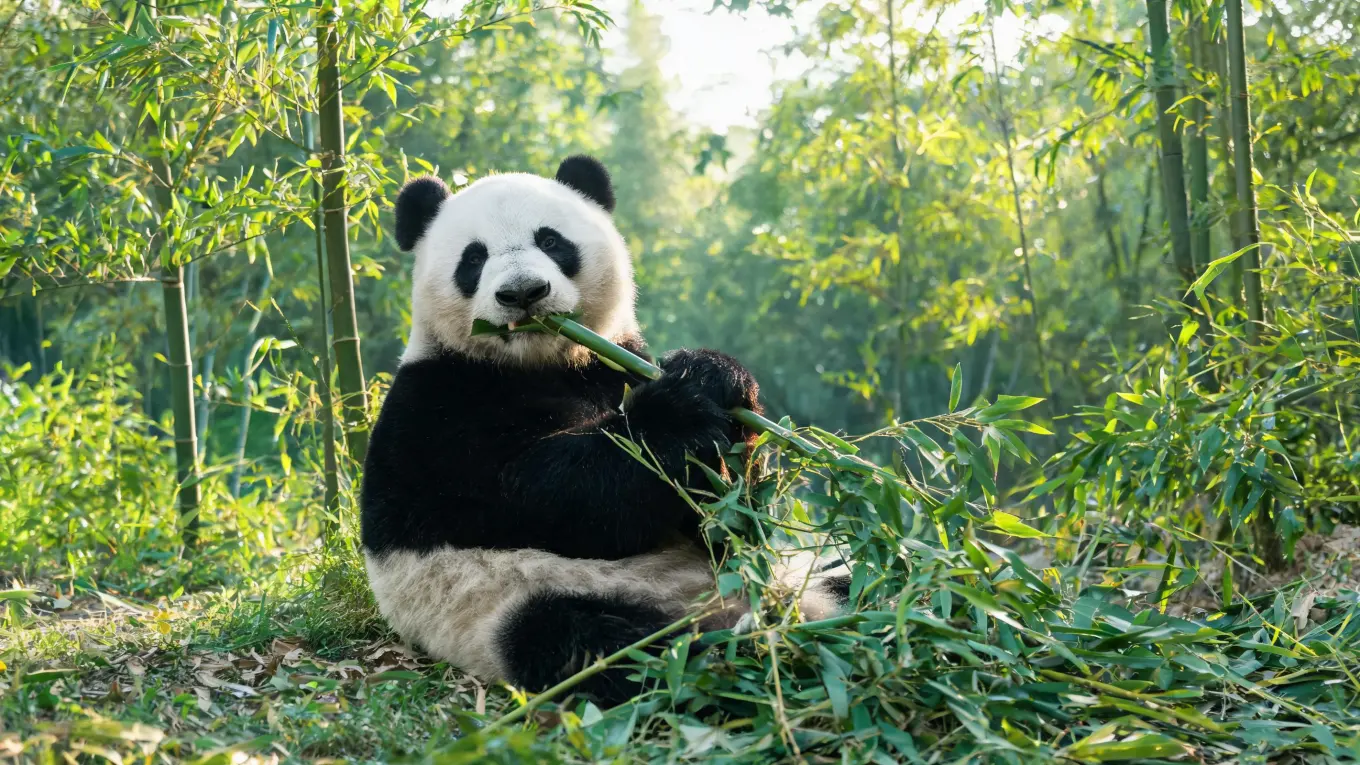
This is Chengdu's flagship attraction and practically unavoidable. It's not a zoo but a scientific breeding and conservation habitat, set in a park-like environment. The golden rule is simple: the earlier, the better. Pandas dislike heat and are most active in the morning, especially between 8 AM and 10 AM, when they climb trees, play, and compete for bamboo. After noon, most lie down to sleep, leaving you with a "panda carpet." Arrive right around opening time (~7:30 AM), head straight to the "Moon Nursery" and "Sun Nursery" for the cubs, then explore at your own pace. Admission is about 55 RMB (subject to official rates), and requires advance online real-name registration. Tickets often sell out days in advance during peak seasons, so book before you go. Foreign visitors (foreign visitors) note: both booking and entry require passport verification; complete this via official channels ahead of time. The park is large, so consider taking the sightseeing cart (extra fee) near the entrance to save energy.
Kuanzhai Alley, Jinli, and Wuhou Shrine
These three iconic spots form Chengdu's "old city" trio, all located in the downtown area and easily visited together. Kuanzhai Alley consists of Wide Alley, Narrow Alley, and Well Alley, featuring late-Qing/early-Republic courtyard houses with gray bricks and tiles. You'll find ear cleaning, gaiwan tea, and Sichuan opera face-changing performances. It's commercialized but has great atmosphere, best visited in the evening, and is free to enter. Wuhou Shrine honors Zhuge Liang and the Shu Han rulers/ministers, serving as the core site for Three Kingdoms culture. Admission is about 50 RMB (subject to official rates). Right next door is Jinli Ancient Street, a replica commercial street separated from the shrine by a single wall. It's free, packed with snacks and handicrafts, and looks stunning with red lanterns lit up at night. Allocate half a day to a full day to cover all three.
Drinking Tea at People's Park & Shopping at Chunxi Road/Taikoo Li
To understand how locals live, visit Heming Teahouse in People's Park. With just a bamboo chair and a bowl of gaiwan tea (about 20–40 RMB, subject to official rates), you can sit from morning until afternoon, watching locals play cards, clean ears, and chat ("bai longmen zhen"). This embodies Chengdu's "slow" lifestyle. The park is free. Chunxi Road and Taikoo Li represent the other side—Chengdu's trendiest shopping district. Taikoo Li juxtaposes viral boutique stores with the millennium-old Daci Temple, blending modernity with ancient charm. It's perfect for shopping, coffee, and people-watching. One offers relaxation, the other buzz; experience both.
Dujiangyan & Qingcheng Mountain (Suburban)
A UNESCO World Heritage combo about a 1-hour drive west of the city center. Dujiangyan Irrigation System is a hydraulic engineering marvel built over 2,000 years ago by Li Bing and his son, still irrigating the Chengdu Plain today—a "living ancient project." Admission is about 80 RMB (subject to official rates). Walk past Fish Mouth, Feishayan, and Baopingkou, cross the Anlan Cable Bridge, and appreciate ancient water-management wisdom. Qingcheng Mountain is a sacred Daoist site divided into Front Mountain (culture/pagodas focused) and Back Mountain (nature/hiking focused). Front Mountain admission is about 80 RMB (subject to official rates), offering a secluded, tranquil escape that lives up to its reputation: "Qingcheng is the most serene under heaven." The two are close; fit-for-purpose travelers can combine them in a day, but splitting it into half-days each is recommended. High-speed rail from Chengdu to Dujiangyan takes only ~30 minutes, making it very convenient.
Leshan Giant Buddha & Mount Emei (Suburban)
Another World Heritage pair south of Chengdu, located further away (~2 to 2.5 hours by car or high-speed rail). Leshan Giant Buddha is a Tang Dynasty seated Maitreya statue carved into a cliff, standing 71 meters tall—one of the world's largest stone Buddha statues. You can walk down wooden plank paths along the cliff to view it from below, or take a boat cruise on the river for a panoramic view. Admission is about 80 RMB (subject to official rates). Mount Emei is a sacred Buddhist mountain famous for its Golden Summit sea of clouds, sunrise views, and "monkey zone." It's vast with many scenic spots; a serious visit takes a full day or even two. Cable cars are available on the mountain (extra fee). Leshan and Emei are often combined into a 1–2 day trip due to their proximity.
Extension: Jiuzhaigou & Huanglong
The colorful forests and lakes of Jiuzhaigou and the travertine pools of Huanglong are undeniably breathtaking. However, they are located in Ngawa Tibetan and Qiang Autonomous Prefecture, at high altitudes, and roughly 8 to 10 hours by road from Chengdu (or require a flight to Jiuzaigou Huanglong Airport). They are not part of Chengdu's suburbs. Please allocate a separate 3 to 4 days, watch for altitude sickness, and do not force them into a Chengdu itinerary.
Classic Itineraries (2/3/4 Days)
- 2 Days (City Only): Day 1: Rush to Panda Base early morning → Wuhou Shrine + Jinli in the afternoon → Kuanzhai Alley at dusk. Day 2: Drink tea at People's Park in the morning → Shop and eat at Chunxi Road/Taikoo Li in the afternoon. Relaxed and unhurried, but skips all suburban attractions.
- 3 Days (City + One Suburb): First two days as above. Day 3: Choose either Dujiangyan & Qingcheng Mountain (convenient high-speed rail round trip) or Leshan & Mount Emei (longer drive). If you want a World Heritage experience but have limited time, Dujiangyan & Qingcheng Mountain is recommended.
- 4 Days (Most Balanced): Day 1: Panda Base + Kuanzhai Alley. Day 2: Wuhou Shrine & Jinli + People's Park + Taikoo Li. Day 3: Dujiangyan + Qingcheng Mountain. Day 4: Leshan Giant Buddha + Mount Emei. Covers pandas, local life, ancient hydraulics, Buddhist mountains, and World Heritage sites, with a manageable pace.
For any itinerary, always schedule the Panda Base for the earliest slot of the day. This is the only way to see active pandas; avoid scheduling it for the afternoon.
Transportation, Tickets & Costs (Metro, Airport Transfers, Panda Base Round Trip, RMB)
Metro is the primary mode of transport in Chengdu, with a dense network covering almost all attractions and both airports. Fares range from about 2 to 10 RMB per trip. Using your phone to scan and pay is highly recommended: locals use the "Ride Code" feature within Alipay or WeChat to tap through gates. If you prefer not to use a smartphone, you can buy single-journey tickets or transit cards at station kiosks.
- Airport to City Center: Chengdu has Tianfu International Airport (TFU) and Shuangliu International Airport (CTU). Always double-check which airport your ticket is for when booking. Shuangliu is closer to the city, with Metro Line 10 going directly downtown. Tianfu is farther; take Metro Line 18 or the airport shuttle bus (~1 hour). Taxis cost about 50–80 RMB from Shuangliu and 120–180 RMB from Tianfu (actual fares may vary).
- Panda Base Round Trip: Accessible by metro (requires transfers; check official latest shuttle info). After exiting the metro, take a connecting bus or walk to the main gate. Alternatively, taxi directly from the city center (~40–60 RMB, actual fares may vary). Taxis or chartered cars save time, especially for seniors, children, or early-morning visits.
- Suburban Transport: Take high-speed rail to Dujiangyan (~30 mins). For Leshan and Emei, take high-speed rail to Leshan Station, then transfer. Independent transfers work, but connections between suburban spots can be fragmented. Chartering a car for a full-day loop is often smoother.
Rough daily per-person costs (excluding flights & hotels): Transport + tickets + meals average 150–300 RMB/day in the city, and 300–600 RMB/day on days involving suburban attractions and longer transit. Budget accordingly based on your style. For foreign visitors: China uses Renminbi (RMB), and cashless QR-code payments dominate. It's highly recommended to link an international bank card (Visa/Mastercard) to Alipay (Alipay) or WeChat Pay (WeChat Pay) (International versions) in advance. Most merchants, attractions, and taxis accept QR payments. Carry some small-denomination RMB cash for emergencies; convenience stores and licensed taxis also accept cash. Currency exchange is available at airports and select banks.
Food Scene (Hot Pot / Chuan Chuan / Dan Dan Noodles / Gaiwan Tea)
- Hot Pot: The soul of Chengdu. Features a spicy beef tallow broth. Classic ingredients include tripe, duck intestines, pork aorta, and tender beef, dipped in a dry chili-garlic sesame oil sauce to cool the heat and enhance flavor. If you're sensitive to spice, order a split pot (yuanyang) or mild level, but note that Chengdu's "mild" is still spicier than elsewhere—go at your own pace.
- Chuan Chuan Xiang (Skewers): A casual, budget-friendly version of hot pot. Ingredients are skewered on bamboo sticks, boiled in broth at your table, and billed by the number of sticks. Great for a quick, authentic bite for one or two people.
- Dan Dan Noodles: A famous Chengdu snack topped with preserved vegetable mince. Mixed well, it delivers a numbing-spicy, savory aroma. Portions are small, perfect as a snack or side dish. Also try Long Chaoshou (wontons), Zhong Dumplings, Sweet Water Noodles, Fuqi Feipian (sliced beef in chili sauce), Bobo Chicken, and Bingfen (ice jelly).
- Gaiwan Tea: It's less about drinking and more about "sitting." A bowl of tea paired with an afternoon of leisure represents the Chengdu lifestyle. Experience it at People's Park or any traditional teahouse.
For foreign visitors: Sichuan cuisine is famous for its "numbing and spicy" (mala) flavor. The "numbing" sensation from Sichuan peppercorns is new to many diners. When ordering, you can proactively request "mild" or "no spicy" (mild/no spicy). Many restaurants offer picture menus or QR-code ordering, which often support English or can be easily assisted with translation apps.
Practical Tips & Pitfalls to Avoid
- Always go to the Panda Base early: Repeated for emphasis: mornings are for active pandas, afternoons are mostly for sleeping naps. Real-name booking is mandatory, and arriving exactly at opening time is crucial. This is the most important tip in this guide.
- Crowds in peak season: Panda Base and Kuanzhai Alley get extremely crowded during holidays and school breaks. Visit popular spots off-peak and early. Book tickets via official channels in advance to avoid long queues or sold-out slots.
- Avoid hot pot traps: Choose reputable shops with local crowds. Be wary of vendors soliciting outside scenic areas, places with unmarked prices, or those aggressively pushing expensive broths. Clarify broth options and mandatory charges before ordering to avoid surprise bills.
- For foreign visitors – Visas & Visa-Free Policies: China offers unilateral visa-free entry, mutual visa exemptions, and transit visa-free policies (e.g., 240-hour transit at certain ports) for select countries. Eligible nations, stay durations, and entry points are subject to change. Always verify against the latest official announcements from China's Ministry of Foreign Affairs, National Immigration Administration, or embassies/consulates. Double-check before traveling.
- Passport Real-Name Registration: Attraction bookings, hotel check-ins, and train/flight purchases all require passport verification. Keep your passport handy. Some hotels lack licenses to host foreigners; confirm this before booking.
- Payments & Internet: Link your international card to Alipay/WeChat Pay beforehand for smoother transactions. Some common overseas apps/websites are restricted in China. Download offline maps in advance (English signage in Chengdu is limited) and arrange a reliable data/Wi-Fi solution.
Should You Hire a Local Guide or Chartered Car?
With Chengdu's extensive metro system and easy QR-code payments, young travelers can easily navigate the city independently. However, hiring a local guide or chartered car is often more hassle-free in these scenarios:
- Domestic Travelers – Suburban Loops: Visiting suburban spots like Dujiangyan/Qingcheng Mountain or Leshan/Emei via independent transfers (high-speed rail + bus + taxi) can be exhausting. A chartered car drops you right at attraction entrances, follows optimized routes, allows flexible adjustments, and is especially stress-free for seniors and kids.
- Foreign Visitors – Language & Communication: An English-speaking local guide or bilingual driver/guide can handle passport-based bookings, help you order food safely, and bridge communication gaps with drivers and merchants. Eliminating the language barrier completely transforms the experience.
- Depth & Efficiency: Locals know exactly which pavilion to rush to at the Panda Base, how to route suburban stops without backtracking, and which hot pot joints are genuinely good. You'll see and taste significantly more in a day than wandering aimlessly.
On HeroGuide / 地接侠, whether you're a domestic independent traveler or a foreign visitor coming to China, you can post your specific needs directly (e.g., "4 days, 2 adults + 1 senior, city center + Dujiangyan/Leshan, need an English-speaking bilingual driver/guide"). Local guides, drivers, and translators will submit quotes. Compare their credentials, reviews, and pricing before deciding. All personal information is anonymized until a booking is confirmed, making it far safer than blind selection. If you're sticking to a relaxed city-only itinerary without suburban trips, independent travel is perfectly sufficient, and there's no need to spend extra on a guide.
Frequently Asked Questions (FAQ)
How many days are actually ideal for Chengdu?
You can see the Panda Base and old streets in 2 city-only days. To include suburban World Heritage sites like Dujiangyan/Qingcheng Mountain and Leshan/Emei, 4 days are recommended. Adding Jiuzhaigou and Huanglong requires an additional 3 to 4 days booked separately. Four days strikes the best balance and offers the most value.
What's the best time to visit the Panda Base? Is booking required?
Arrive right around opening time (~7:30 AM). Pandas dislike heat and are most active between 8 and 10 AM; after noon, they mostly sleep. Advance online real-name booking is required. Tickets often sell out days in advance during peak seasons, costing about 55 RMB (subject to official rates). Foreign visitors must use passports for both booking and entry.
Is it easy to pay and get around as a foreign tourist?(Is it easy to pay and get around as a foreign tourist?)
QR-code mobile payment is the mainstream method. It's recommended to link an international bank card (Visa/Mastercard) to Alipay or WeChat Pay (International versions) in advance. Most merchants, taxis, and attractions support it. Keep some small RMB cash for emergencies. Regarding language, English signage at attractions is limited, and restaurant menus are mostly in Chinese. Bring offline maps and translation apps. For a hassle-free experience, you can find an English-speaking bilingual driver/guide or local guide on HeroGuide to assist with communication and ticketing. Visa-free entry policies are subject to the latest official announcements from Chinese authorities.


