
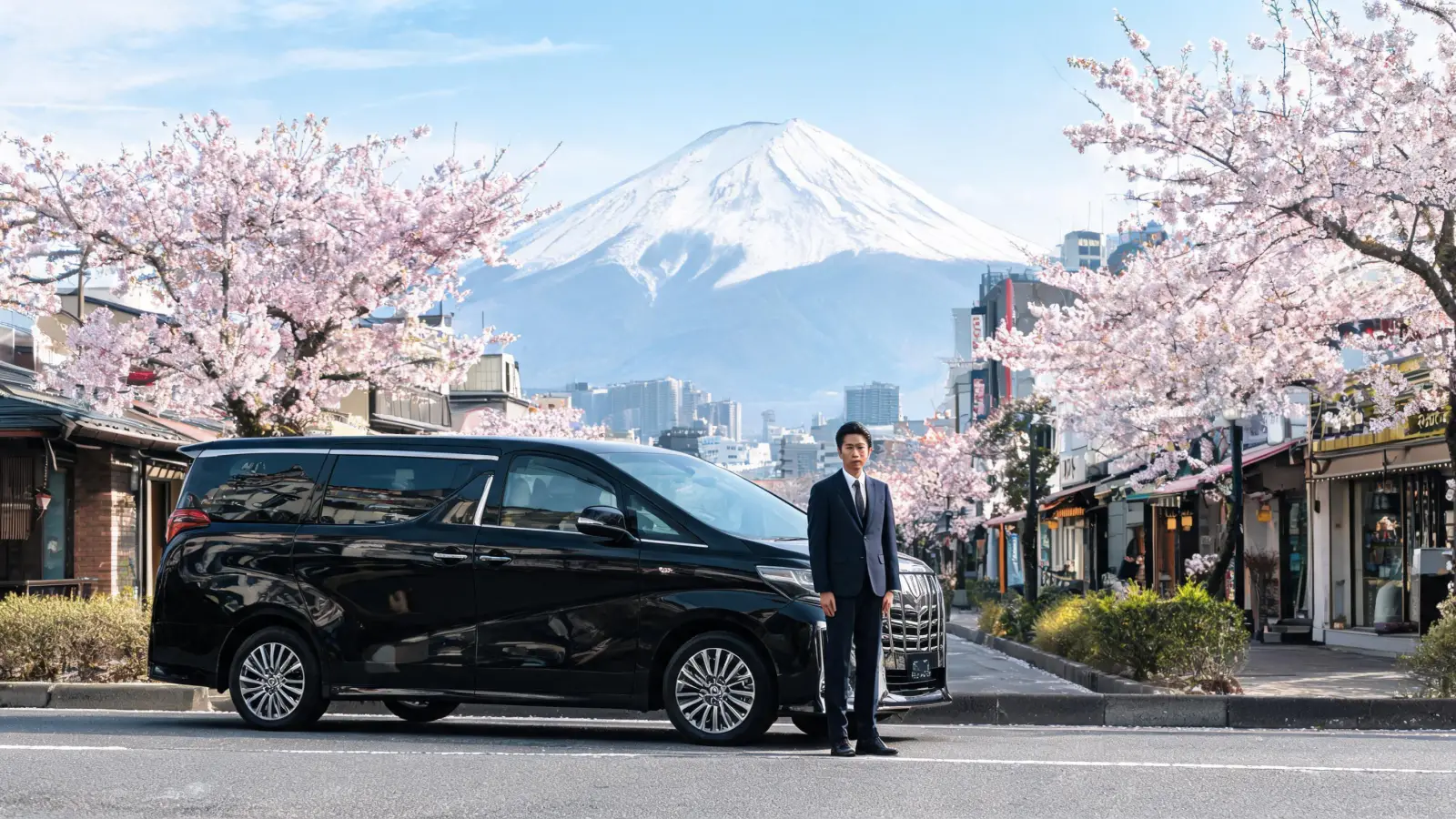
Bottom line: For independent travel with a chartered car in Japan in 2026, based on an 8–10 hour daily rate, a 5-seater economy sedan costs approximately RMB 900–1,500/day; 7–8 seater minivans like the Toyota Alphard typically range from RMB 1,500–2,600/day; a 10-seater Toyota HiAce runs about RMB 2,000–3,000/day; and mid-size buses (around 20 seats) cost roughly RMB 2,800–4,500/day. These are all-inclusive package rates covering a Chinese-speaking driver, fuel, highway tolls, and parking fees. Prices in Tokyo, Kyoto, and Hokkaido during peak seasons will lean toward the upper end, while Osaka and Okinawa in the off-season can be pushed down to the lower end. Below, we break down every vehicle type, each pricing variable, and common pitfalls in one go.
Daily Rates by Vehicle Type (RMB, with JPY Reference)
First, let’s clarify the baseline: The "daily rate" below refers to the standard one-day charter price for 8–10 hours of service within a single region, which already includes the driver’s dispatch fee, fuel, ETC tolls, and urban parking fees. The exchange rate is roughly estimated at 1 RMB ≈ 20 JPY, but actual rates depend on the transaction day.
- 5-seater economy sedan (Toyota Camry/Crown class): Approximately RMB 900–1,500/day (~18,000–30,000 JPY). Ideal for 2–3 adults with light luggage; the most cost-effective choice for airport transfers or city day tours.
- 7–8 seater minivan (Toyota Alphard/Vellfire/Sienna): Approximately RMB 1,500–2,600/day (~30,000–52,000 JPY). The Alphard is the "top-tier" choice for Japanese charters, offering spacious interiors, excellent soundproofing, and easy entry/exit. It’s the top pick for families with elderly members or children, or small groups of 4–6 people, though prices are firmer during peak season.
- 10-seater Toyota HiAce: Approximately RMB 2,000–3,000/day (~40,000–60,000 JPY). The king of value for money. Easily handles 7–9 passengers plus large luggage, though ride comfort doesn’t quite match the Alphard.
- Mid-size bus (13–20+ seats): Approximately RMB 2,800–4,500/day (~56,000–90,000 JPY). Best for groups of 10+, ski trips carrying equipment, or Okinawa diving trips with gear. Exact pricing depends on seat count and vehicle age.
A quick heads-up: You might occasionally see suspiciously low online listings like "Alphard for 888 RMB/day." These are usually unlicensed operators, stripped-down packages (e.g., only 5 hours), or bait-and-switch pricing designed to lure you in before adding hidden fees. Don’t be swayed by the headline number.
4 Key Variables That Affect Pricing
1. Duration of Use: The Standard is 8–10 Hours
In Japan’s charter industry, a standard one-day rental is defined as 8 or 10 hours (including the driver’s meal break), timed from hotel pickup to hotel drop-off. Any time exceeding the agreed duration incurs an overtime fee, typically ranging from RMB 150–350/hour depending on the vehicle size. Half-day charters (4–5 hours) usually cost 60%–70% of the full-day rate rather than half, since the driver still dedicates their entire day to your booking.
2. Regional Differences: Tokyo/Kyoto Are the Most Expensive, Osaka Is Mid-Range
For the same Alphard model, the general price ranking is: Tokyo ≈ Kyoto > Hokkaido > Osaka > Okinawa. Tokyo and Kyoto command higher rates due to elevated labor and parking costs plus strong demand, typically 15%–25% more than Osaka. Hokkaido is vast, with destinations often over a hundred kilometers apart; while the base rate isn’t always the highest, long-distance travel frequently triggers "cross-region/long-haul" surcharges. Okinawa leans more toward leisure travel, so off-season prices remain relatively moderate.
3. Seasonality: Cherry Blossom, Autumn Foliage, New Year, and Golden Week All Drive Up Prices
Japanese car charters feature very distinct peak-season premiums. During late March–April (cherry blossom season), November (autumn foliage), late December–early January (New Year holidays), and late April–early May (Golden Week, including China’s Spring Festival), rates generally surge by 20%–50%. Top-tier vehicles for Kyoto’s autumn foliage season, for instance, often need to be booked 1–2 months in advance. Traveling off-peak (such as mid-to-late May, June, or September) not only saves money but also means fewer crowds at attractions.
4. Driver vs. Bilingual Driver-Guide: One of the Biggest Price Differentials
This is a point many travelers miss. A driver-only service simply ensures safe transportation from point A to B, with no commentary, sightseeing guidance, or itinerary planning. A bilingual Chinese driver-guide (driver + tour guide) provides historical and cultural commentary along the way, helps secure restaurant reservations, skips lines, recommends hidden gems, and essentially acts as a private concierge. Driver-guides typically cost RMB 300–700 more per day than drivers alone, but for first-time visitors who want an immersive experience without spending hours researching, this premium is often worth every penny. The upper limits of the price ranges mentioned above are generally calculated based on bilingual driver-guide services.
What’s Typically Included vs. Excluded
Always clarify every item explicitly during negotiations—this is the key to avoiding surprise charges on the spot.
The daily rate typically includes:
- Driver dispatch fee and vehicle depreciation
- Fuel costs
- Highway tolls (via ETC)
- Parking fees within reasonable urban limits
- Driver accommodation and meal allowances for cross-region overnight trips (e.g., if your itinerary extends to Hakone/Lake Kawaguchiko overnight, you’ll need to cover the driver’s hotel stay, typically RMB 300–600/night)
The daily rate typically excludes, requiring additional payment:
- Attraction entrance tickets, cable cars, boat rides, etc. (driver admission is usually free)
- Overtime fees (approximately RMB 150–350/hour; ensure this is clearly stated in writing)
- Actual expenses for restaurants, onsens, or other bookings arranged by the driver-guide
- Extra mileage surcharges for remote areas (some agencies charge beyond a base kilometer allowance)
Japan Car Charter: Vehicle Types & Daily Rate Reference Table
| Vehicle Type | Recommended Capacity | Luggage Capacity | Daily Rate (RMB / 8–10 hrs) | JPY Reference | Typical Use Case |
|---|---|---|---|---|---|
| 5-seater Economy Sedan | 2–3 pax | 2–3 medium suitcases | 900–1,500 RMB | 18,000–30,000 JPY | Airport transfers, city day tours |
| Alphard/Vellfire (7–8 seater) | 4–6 pax | 4–6 large suitcases | 1,500–2,600 RMB | 30,000–52,000 JPY | Family trips, traveling with elderly/children |
| Toyota HiAce (10 seater) | 7–9 pax | 8–10 large suitcases | 2,000–3,000 RMB | 40,000–60,000 JPY | Large groups, bulky luggage |
| Mid-size Bus (13–20+ seats) | 10–18 pax | Ample space / fits ski & dive gear | 2,800–4,500 RMB | 56,000–90,000 JPY | Corporate teams, ski/diving groups |
Note: Peak seasons (cherry blossoms/autumn foliage/New Year/Golden Week) carry a 20%–50% surcharge on these rates. Bilingual driver-guides cost approximately RMB 300–700 more per day than drivers alone. The table reflects standard 8–10 hour rates within a single region; cross-region or long-distance itineraries are quoted separately.
Practical Details: Child Seats, Luggage & Airport Transfers
- Child Seats: Japanese law mandates that children under 6 must use safety seats. Reputable agencies provide them free of charge or for a small fee (~RMB 30–60/unit/day). Be sure to inform them of the child’s age/weight in advance so they can supply the appropriate car seat or booster cushion.
- Luggage Capacity: Don’t just look at seat count. Once an 8-seater Alphard accommodates 6 passengers, the trunk can only fit 3–4 large suitcases. If you have a large group with lots of bags, opt for the HiAce instead. Always specify in advance if you’re traveling in ski season with boards or diving season with gear.
- Airport Transfer Timing: For pickups at Narita, Haneda, or Kansai airports, drivers track your flight number in real-time. Reasonable flight delays won’t incur extra charges, but you must provide an accurate flight number and estimated customs clearance time. For drop-offs, allow ample buffer time; it takes about 1.5–2 hours to drive from central Tokyo to Narita.
Common Pitfalls, Broken Down Step-by-Step
- Unlicensed Operators ("Black Cars"): This is the biggest risk. Legally licensed commercial vehicles in Japan display green license plates (white text on green background) and hold appropriate transport business permits. Using white-plate private cars for paid passenger transport is illegal; in case of an accident, insurance won’t cover it, and police may intervene. Always verify that the driver/agency holds valid commercial licensing and passenger insurance before booking.
- Insurance Coverage: Passengers on legitimate charters should be covered under commercial vehicle liability insurance. Unlicensed operators typically rely on private auto insurance, which denies claims when used for commercial passenger transport, leaving you fully liable.
- Sudden Price Hikes: Some lure customers with rock-bottom prices, then add fees onboard citing "extra fuel," "parking fees," or "traffic congestion surcharges." Countermeasure: Get the total price, inclusions, and overtime fee structure confirmed in writing before finalizing.
- Opaque Overtime Fees: "We’ll figure out overtime later" is a classic trap. Clearly define the base hours, hourly overtime rate, and how partial hours are calculated. Keep everything documented.
- Drivers Charging Guide Rates Without Providing Guide Services: Clearly distinguish between a driver-only service and a bilingual driver-guide. Don’t pay extra for commentary or planning services that aren’t actually provided.
FAQ: Frequently Asked Questions
Is chartering a car in Japan really worth it compared to taxis or JR trains?
For groups of 3 or more with substantial luggage heading to scattered attractions (like around Mount Fuji, Hokkaido, or suburban Kyoto), chartering is generally cheaper and far less stressful than piecing together multiple taxi rides. For 1–2 travelers sticking to major city routes, JR lines and subways are more cost-effective. If you’re traveling with elderly members or children, or have a tight schedule, a chartered car is almost always the optimal choice.
Why is the Alphard more expensive than the HiAce, and which should I choose?
The Alphard offers superior ride comfort, luxury seating, and better soundproofing, making it ideal for 4–6 passengers prioritizing comfort. The HiAce provides more interior space, greater luggage capacity, and a lower price tag, suiting 7–9 passengers or those with heavy luggage. Choose the Alphard if you’re a smaller group seeking premium comfort; opt for the HiAce if you’re larger and prioritize practicality.
Do I need to tip the driver separately?
Tipping is not part of Japanese culture, nor is it required for charters. If you’re satisfied with the service, a small token of appreciation or buying the driver a drink is perfectly fine—no pressure whatsoever.
How far in advance should I book to secure availability?
Booking 1–2 weeks ahead is sufficient for shoulder seasons. For peak periods like cherry blossom season, autumn foliage, Golden Week, and New Year holidays, we recommend booking 1–2 months in advance. Top-tier vehicles and experienced bilingual guides sell out quickly; last-minute bookings often leave you with only overpriced options or no availability at all.
How are cross-region itineraries (e.g., Tokyo to Hakone/Lake Kawaguchiko overnight) priced?
Cross-region trips are typically billed by adding daily rates per day, plus separate coverage for the driver’s accommodation (~RMB 300–600/night) and meal allowance. Long distances may trigger mileage surcharges, so clarify all potential extra costs upfront during negotiations.
How can I verify that the operator isn’t running an unlicensed service?
Check if the vehicle displays a green license plate, request proof of commercial licensing and passenger insurance, verify that the car model and plate match your booking, and book through a reputable platform that keeps chat logs and pricing records on file. If credentials are vague, they insist on private transactions only, or the price seems unrealistically low, walk away immediately.
Overwhelmed by Scattered Quotes? Let Local Drivers Bid for Your Trip
Charter pricing feels chaotic because the same vehicle can be quoted 30%–40% differently across various agencies and drivers, making it nearly impossible to gauge a fair market rate. Instead of chasing down individual quotes and falling for bait pricing, flip the script—post your requirements on 地接侠 (specify dates, group size, luggage, destinations, and whether you need a bilingual driver-guide), and let qualified local Chinese driver-guides submit competitive bids directly to you. Compare multiple quotes side-by-side alongside verified credentials and genuine reviews. Once you select your preferred option, lock it in with a refundable deposit. Transparent pricing and clear accountability eliminate the room for unlicensed operators and surprise fees. Leave the haggling and vetting to our platform mechanism—you just focus on enjoying your trip.


