
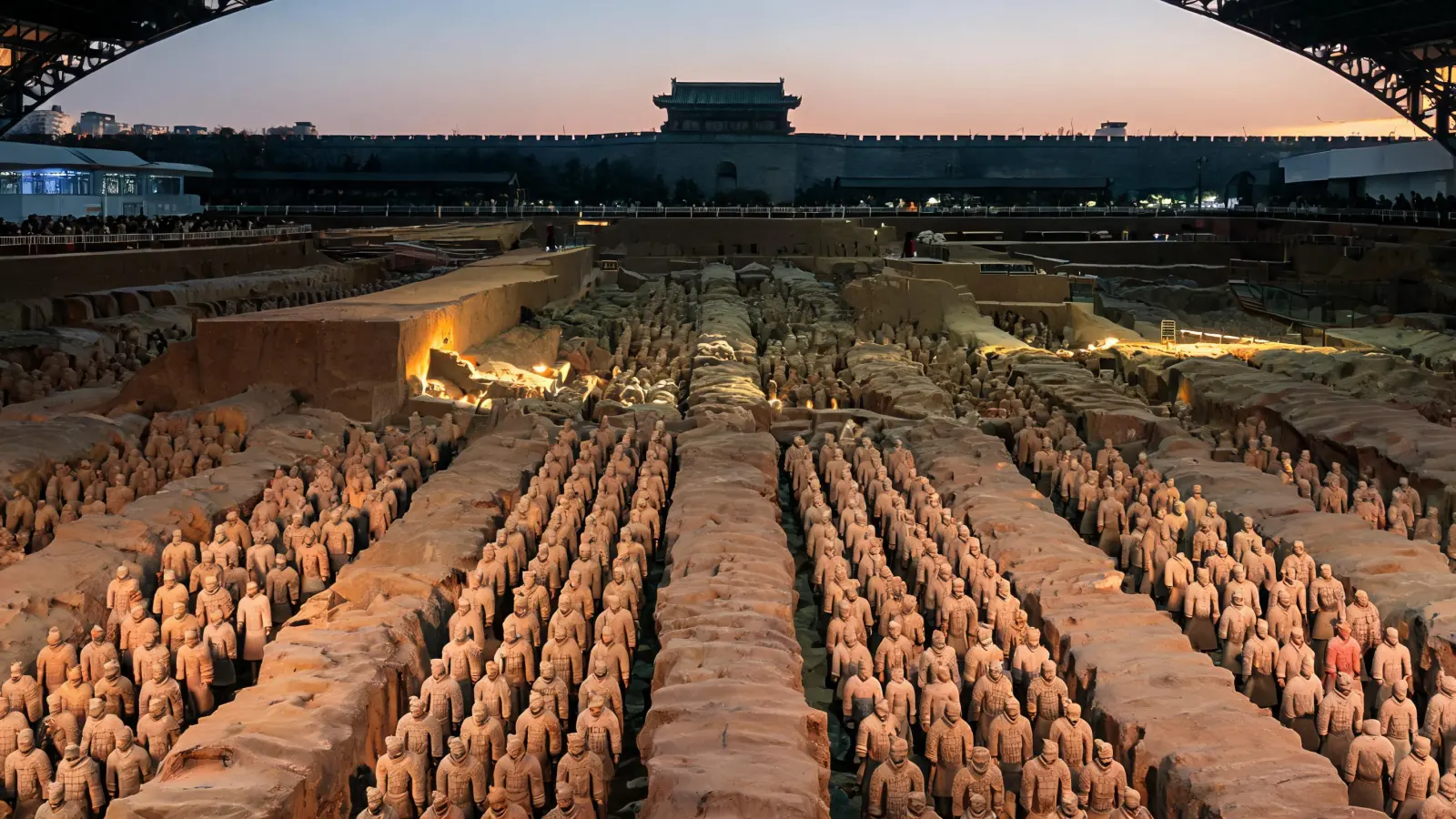
One-sentence takeaway: Don't just show up at the Terracotta Warriors unprepared. The Lintong route (Terracotta Warriors + Huaqing Palace + Mount Li) is about 40 km from the city center. The most hassle-free approach is to spend 2 days exploring downtown (City Wall, Muslim Quarter, Giant Wild Goose Pagoda, Shaanxi History Museum) and dedicate a separate day to a private car tour of Lintong. Book real-name tickets for the Terracotta Warriors and Shaanxi History Museum in advance via official platforms. Foreign visitors should bring their passports for ticketing and hotel check-ins, and link international credit cards to Alipay/WeChat Pay. With this setup, you can fully experience Xi'an's "Qin, Han, and Tang" dynasties in just 3 days.
How Many Days Are Ideal?
Xi'an's core consists of three layers: the Ming-Qing old town within the City Wall, the Han-Tang ruins outside the walls, and the Qin dynasty sites in Lintong. While the attractions aren't widely scattered, each deserves time to appreciate; rushing through them would be a waste. Here’s a practical breakdown of how many days you’ll need:
- 2 days: This is the bare minimum if you want to see both downtown highlights and the Terracotta Warriors without regrets. Day 1 covers the City Wall, Muslim Quarter, Bell & Drum Towers; Day 2 takes a private car to Lintong for the Terracotta Warriors and Huaqing Palace, meaning you’ll have to skip the Shaanxi History Museum. Best for transit passengers or those visiting specifically for the Terracotta Army.
- 3 days: The sweet spot for a comfortable pace. Spend two days leisurely exploring downtown (including the Shaanxi History Museum, Giant Wild Goose Pagoda, and Grand Tang Mall), and dedicate a full day to Lintong. This is the choice for the vast majority of travelers.
- 4 days or more: You can add a day trip to a nearby destination—Mount Huashan (for its sheer cliffs) or Hukou Waterfall (for its grandeur)—choosing one, as each requires a full round-trip day.
Note: Both the Terracotta Warriors and the Shaanxi History Museum are located in the eastern/southeastern part of the city. Trying to cram them into the same day will lead to constant rushing and a ruined experience. It’s highly recommended to split them across different days.
Must-Visit Attractions
The Terracotta Warriors & Huaqing Palace (Lintong, often paired with a private day tour)
The Terracotta Warriors (Emperor Qinshihuang's Mausoleum Site Museum) is Xi'an's "must-see." Among the three pits, Pit No. 1 is the most breathtaking. Tickets cost around ¥120 during peak season and ¥90 off-season (includes the main museum and Emperor Qinshihuang's Mausoleum Lishan Park, subject to official on-site pricing). Real-name online reservation is mandatory. During peak seasons, same-day tickets are rarely available, so book well in advance through official channels. Arrive right at opening (~8:30 AM) or late afternoon when crowds thin out to avoid midday tour groups. A guided tour is essential—without one, you're just looking at "a pile of clay figures"; with one, you'll truly understand the kneeling archers, generals, and chariot formations.
Also in Lintong, Huaqing Palace (~¥120, subject to official pricing) served as a hot spring resort for Emperor Xuanzong of Tang and Yang Guifei, and is also the site of the Xi'an Incident. Nestled against Mount Li, you can take a cable car up. Lintong is about 40 km from downtown. While accessible via Metro Line 9 plus buses, navigating between the Terracotta Warriors, Huaqing Palace, and Mount Li by taxi/transfers can be exhausting. That’s why the most popular option is to book a private day tour that connects all three spots, saving you from sun exposure and waiting for transfers.
Xi'an City Wall & Bell & Drum Towers
The Ming Dynasty City Wall is the best-preserved ancient city wall in China, stretching approximately 13.7 km around. Tickets are around ¥54 (subject to official pricing). The best way to experience it is to rent a bicycle and ride the entire loop (single/double bikes incur extra fees and require a deposit), taking about 1.5–2 hours. Entering at dusk offers the most stunning views of the sunset and the city lights turning on. The Bell and Drum Towers sit right in the center of the old city. The plaza looks great at night, and walking under the Drum Tower leads directly to the Muslim Quarter. Allow 1–2 hours here.
Muslim Quarter & Yongxing Fang
The Muslim Quarter is the most famous snack street. It's lively, but the closer you get to the main thoroughfare, the more "touristy" it becomes, with inflated prices and occasional overcharging. Savvy eaters venture into the side alleys (like Dapiyuan or Sajinqiao), where locals actually grab breakfast. Yongxing Fang is a replica-style block concentrating snacks from across Shaanxi province (famous for the "smashing bowl wine" trend). It's more organized and great for a one-stop photo op. Both areas are free to enter. Eat according to your appetite, but don't try to fill up solely on the main streets.
Giant Wild Goose Pagoda & Grand Tang Mall / Tang Paradise
The Giant Wild Goose Pagoda was where Xuanzang translated Buddhist scriptures and stands as a Tang Dynasty landmark. Entry to Da Ci'en Temple costs around ¥50, with an additional fee to climb the pagoda (subject to official pricing). The north and south plazas are free. The North Square Musical Fountain runs on a fixed schedule (check on-site announcements for times). Right next door, Grand Tang Mall is a free pedestrian street. At night, Tang-style lighting and street performances like the "Tumbler Girl" make it Xi'an's top nighttime attraction—visit after dark. Further south lies Tang Paradise, a paid theme garden (~¥120, subject to official pricing) featuring large-scale water-screen movie shows. Add it if you have extra time.
Shaanxi History Museum (Reservation Required)
"Give me one day, return ten thousand years to you." The Shaanxi History Museum is the key to understanding Xi'an and even ancient Chinese history. Basic exhibits are free, but real-name reservations via official WeChat accounts/miniprograms are mandatory. Tickets are released daily and sell out instantly—it's one of the hardest tickets to snag in Xi'an, so set alarms to grab them at release time. Inside, special exhibitions like the Hejiacun Hoard and the Tang Dynasty Mural Treasure Hall charge separate fees and are highly recommended. Without understanding the artifacts, you'll just be sightseeing superficially, so renting an audio guide or hiring a docent is well worth it. If you can't secure a ticket, keep an eye on the new branch (Qin-Han Museum) for overflow capacity.
Nearby Day Trips: Mount Huashan / Hukou Waterfall
Mount Huashan boasts the title "The Most Precipitous Mountain Under Heaven." It's about 120 km from Xi'an, reachable via a 30-minute high-speed rail ride to Huashan North Station, followed by a tourist shuttle. Cable cars (West Peak/North Peak) cost ~¥80–140 one-way (subject to official pricing), while experiences like the Plank Walk in the Sky require separate purchases. Climbing Huashan is extremely strenuous. Either take the cable car up and down with light gear, or prepare for the hardcore "night climb to catch the sunrise." Either way, it demands a full day. Hukou Waterfall is a massive waterfall on the Yellow River, located in northern Shaanxi. It's quite far from Xi'an (3–4 hours one way by car) and is better suited for a chartered vehicle or group tour (1–2 days). The water flow is spectacular during the rainy season. Only schedule these if your itinerary has extra flexibility—don't force them in.
Classic Itineraries (2 / 3 / 4 Days)
- 2-Day (Terracotta Warriors + Downtown Highlights): Day 1: Cycle the City Wall → Bell & Drum Towers → Snack hunting in the Muslim Quarter → Grand Tang Mall at night; Day 2: Private car Lintong route (Terracotta Warriors + Huaqing Palace), return to city in the evening. Tight pace, but you won't miss either the warriors or the ancient city.
- 3-Day (Recommended): Day 1: City Wall → Bell & Drum Towers → Muslim Quarter / Yongxing Fang; Day 2: Shaanxi History Museum (morning reserved slot) → Giant Wild Goose Pagoda → Grand Tang Mall (night); Day 3: Private car Lintong route (Terracotta Warriors + Huaqing Palace + Mount Li). Balanced pace, most popular.
- 4-Day (Add Nearby Excursion): Based on the 3-day plan, choose one for Day 4 — Mount Huashan (high-speed rail round trip) or Hukou Waterfall (charter/group tour). Choose Huashan for fitness enthusiasts, Hukou for river scenery.
Transport, Tickets & Costs (Metro, Airport Transfer, Terracotta Warriors Round Trip, RMB)
Airport to City Center: Xi'an Xianyang International Airport (XIY) is about 40 km from downtown. The airport intercity railway/metro connects directly to city transfer lines, taking ~40–60 minutes. Airport buses run multiple routes into the city for ~¥25–30. Taxis cost around ¥100–120 (actual fare may vary).
City Transport: The metro network is now quite dense, covering core hubs like the Bell Tower, Giant Wild Goose Pagoda, and Xi'an North Railway Station. Single trips range from ¥2–7. Foreign visitors can use Alipay/WeChat "Ride Codes" to tap through turnstiles directly—no physical card needed; cash tickets are also available.
Round Trip to Terracotta Warriors: Taking Metro Line 9 to Huaqing Pool/Qinling and transferring to a bus is the cheapest option, but involves multiple transfers and waiting in the sun. Direct tourist buses depart from the main train station/Xi'an North Station. If you want to avoid hassle, travel with a large group, or are bringing elderly/children, a private day tour connecting the Terracotta Warriors, Huaqing Palace, and Mount Li is much more convenient.
Estimated Costs (per person/day, for reference only, actuals may vary): Entrance fees ~¥100–250, city transport ~¥20–40, main meals ~¥60–150. Lintong private day tours are charged per vehicle, making them more cost-effective when split among a group. Overall, Xi'an is a highly cost-effective travel destination.
Local Cuisine (Roujiamo / Yangrou Paomo / Biangbiang Noodles)
- Roujiamo (Chinese Burger): Slow-braised pork in aged sauce wrapped in a white Ji mo bun. Look for authentic slow-braised meat, and ensure the bun is crispy outside and soft inside.
- Yangrou Paomo (Mutton & Bread Soup): Locals break the bread themselves into soybean-sized pieces before it's cooked with mutton broth—the smaller the pieces, the more flavorful. Served with pickled garlic and chili sauce. Foreign visitors can ask staff to pre-break it or try "Xiao Chao Paomo" (stir-fried version) for a hands-on experience.
- Biangbiang Noodles (Belt Noodles): As wide as a belt, the unpronounceable character 「biáng」 itself is a Xi'an icon. Topped with sizzling chili oil, it's incredibly aromatic.
- Other must-tries: Liangpi (cold skin noodles), Hulatang (spicy soup), Hulu Chicken, Zeng Gao (steamed sticky rice cake), Jing Gao (mirror cakes), Jia San Soup Dumplings. For an authentic start to the day, pair meatball Hulatang with Youcha Mahua (fried dough twists in tea soup).
Tip: Long queues at viral shops on main streets don't always mean the best taste. Old-school eateries tucked in local alleys are often more authentic and affordable. With plenty of Halal options, catering to diverse dietary preferences is easy.
Practical Tips & Pitfalls to Avoid
- Terracotta Warriors "Black Guides" & Fake Day Tour Scams: Outside train stations and scenic areas, touts often shout about "direct shuttles/free guides," but they'll actually drag you to counterfeit sites like the "World's Eight Wonders Museum" or "Hongmen Banquet Site" to force shopping. Only trust the official ticket office and visitor center of the Emperor Qinshihuang's Mausoleum Site Museum. Hire legitimate guides through official museum channels. For private day tours, always book through reputable platforms with written contracts specifying itineraries and guaranteeing no forced shopping stops.
- Book Well in Advance: Both the Terracotta Warriors and Shaanxi History Museum require real-name reservations and often sell out instantly. Monitor official channels a few days before your trip to secure tickets—don't risk showing up hoping for walk-in availability.
- Crowds in Peak Season: May Day, National Day holidays, and summer bring massive crowds. Visit attractions early in the morning or stagger your schedule. Sun protection and hydration are crucial, as Xi'an summers are intensely hot.
- Foreign Visitors · Visa & Visa-Free Policies: China offers unilateral visa-free entry and transit visa-free stays (duration subject to policy) for certain nationalities. Applicable countries, allowed stay durations, and eligible ports of entry are strictly based on the latest official Chinese government announcements. Verify your nationality's eligibility before traveling.
- Foreign Visitors · Ticketing & Check-in: Real-name attraction tickets and hotel registrations require your passport. When booking accommodations, confirm the hotel is "authorized to host foreign guests" to avoid being turned away upon arrival.
- Foreign Visitors · Mobile Payments: Xi'an relies heavily on digital payments offline. It's highly recommended to link international bank cards to Alipay or WeChat Pay (International versions) beforehand. You can then scan QR codes for metros, meals, and tickets. Keep some cash on hand for emergencies.
- Foreign Visitors · Navigation & Language: English signage is limited. Save offline maps, install translation apps, and screenshot addresses in both Chinese and English. Metro announcements include English, and asking younger locals or visiting scenic area service desks usually yields smoother results.
Should You Hire a Local Guide or Charter Car?
It depends on your travel style and where you might hit roadblocks:
- Domestic Independent Travelers: If you want a relaxed visit to the Terracotta Warriors but fear scam touts, a Lintong/Huashan private car with driver-guide is highly worthwhile. It avoids hustlers, guarantees no shopping stops, smoothly connects the Qin Mausoleum and Mount Li route, and provides clear historical context on "Qin Unification" and the "Xi'an Incident" en route—a vastly superior experience to squeezing onto public buses.
- Inbound Foreign Visitors: Language barriers, ticket booking, ordering food, and mobile payments are often the real hurdles. An English-speaking local guide or bilingual driver-guide can handle reservations, hotel communication, restaurant ordering, and artifact background explanations. They effectively tear down the "language wall," transforming your trip from "constantly stuck" to "seamlessly smooth."
Both types of travelers can post their requirements on 地接侠 (specifying dates, group size, desired attractions, language needs like English/other languages, and whether a private car is needed). Local guides/drivers will then proactively submit bids. You can compare credentials, reviews, and prices before confirming. Contact details and personal information are anonymized until the deal is finalized, making it far more reliable than random street touts. Choose what fits your needs—no pressure.
Frequently Asked Questions (FAQ)
- Can I buy Terracotta Warriors tickets on-site the same day? Almost never during peak season. The site operates on a real-name online reservation system, and same-day slots are frequently sold out. Always book in advance through official channels and bring your ID/passport used for booking.
- How do I reserve Shaanxi History Museum tickets? Why are they always sold out? Basic exhibits are free but require real-name reservations via official WeChat accounts/miniprograms in advance. Tickets are released at fixed times daily and vanish instantly. Set alarms for release times, or consider purchasing paid special exhibition tickets or visiting the new branch (Qin-Han Museum) for overflow capacity.
- As a foreign visitor, how do I handle visas and mobile payments in Xi'an? Visa eligibility depends on whether your nationality qualifies for China's unilateral or transit visa-free policies, strictly based on the latest official announcements. For payments, simply link your international bank card to Alipay or WeChat Pay (International versions) beforehand to scan and go. Ticketing and hotel check-ins require real-name registration with your passport, and carrying some cash is a safe backup.


